Put on a gig, start to finish
Booking the act, hiring the room, selling the tickets and running the door are four different jobs, usually across four different tools. CIRCUIT is the one place where a show goes from an idea to a settled payout.
Start free as a promoter →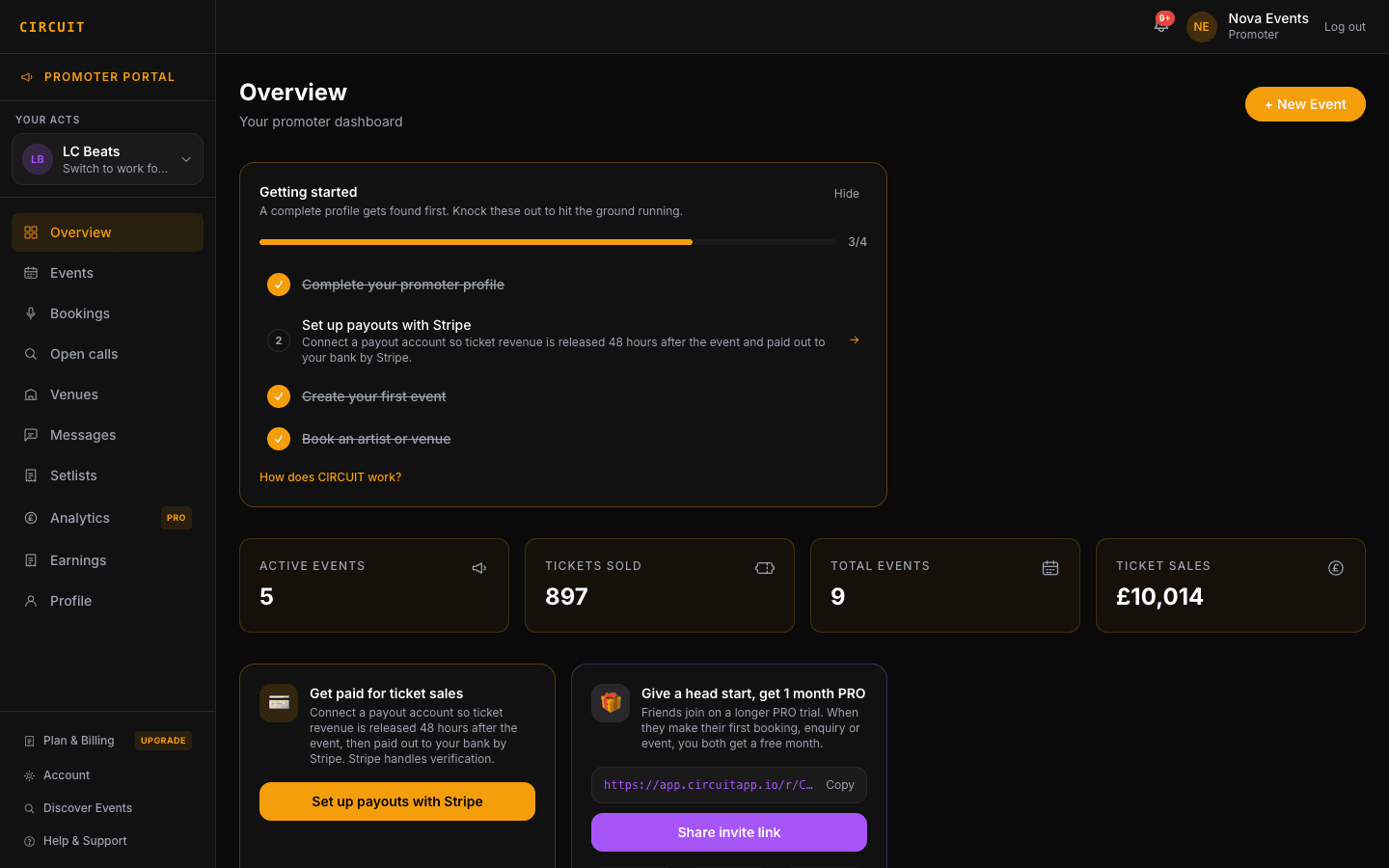
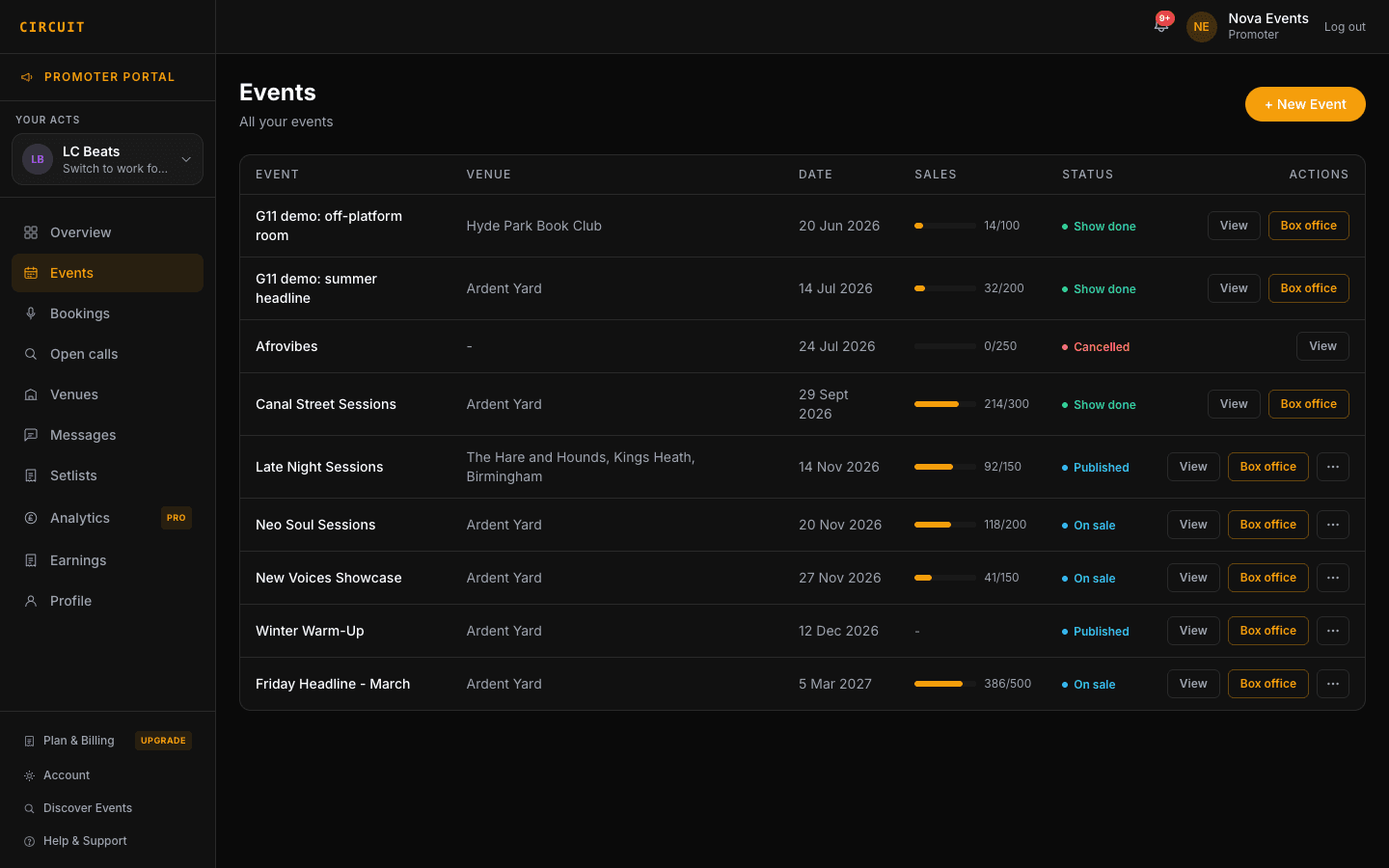
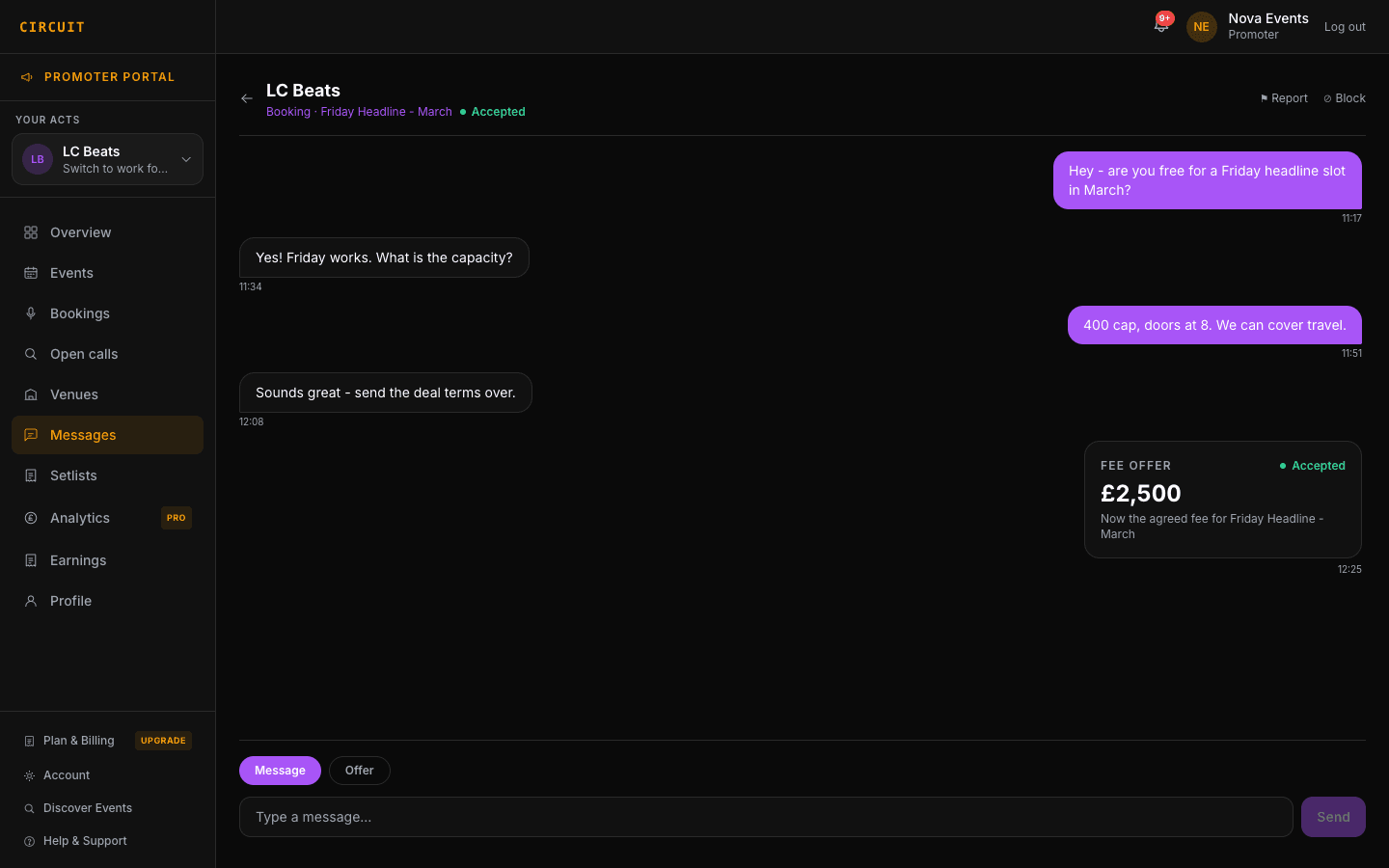
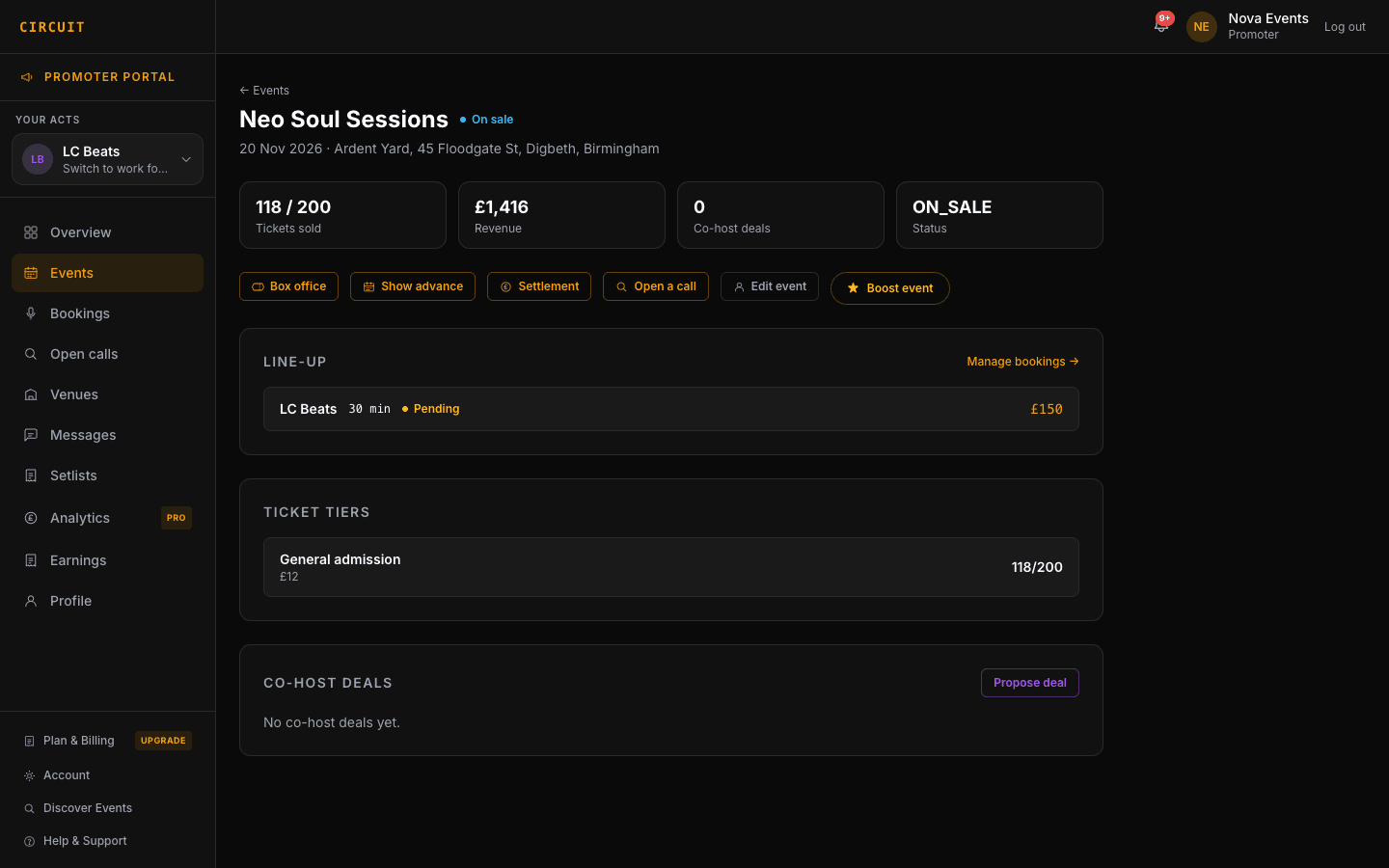
How a show runs on CIRCUIT
Five stages, one platform. Nothing here needs a spreadsheet, a separate ticketing account, or a group chat that nobody can find afterwards.
- 01
Find the act and the room together
Most of the work in booking a show is finding an artist who is free and a room that is open on the same night. CIRCUIT searches both at once. Artists publish the dates they are available, venues publish their open nights, and you filter by city, capacity and genre until the two line up.
- 02
Agree the deal in writing
Send a booking request with the fee attached, negotiate in the thread, and settle on terms without a single chain of forwarded emails. If you would rather share the upside than pay a flat fee, set a revenue split with the artist instead and let the platform do the arithmetic.
- 03
Put tickets on sale
Build as many tiers as the night needs - early bird, general, VIP - each with its own price and allocation. Fans pay by card through Stripe and their QR ticket arrives immediately. There is no second platform to configure and no separate payout to reconcile.
- 04
Run the door
Scan tickets on the door from a phone. The box office updates live as people come in, so you can see how full the room is, who is still outside, and how each tier is performing while the night is happening rather than the morning after.
- 05
Everyone gets paid
Ticket money settles to you. The artist fee is held from the moment the booking is confirmed and releases automatically after the show, so the artist knows the money is real before they load in and you are not writing cheques at midnight.
Everything the night needs
Event Creation
Build your event from scratch - name, description, date and venue, from first draft to the night itself.
Artist Bookings
Search artists by genre, city and the dates they have actually published as free. Send a request with a fee, negotiate, and confirm your lineup in one thread.
Venue Enquiries
Search venues by city, type and capacity, then send a structured hire enquiry with your event details and deal terms already attached.
Multi-Tier Tickets
Create multiple ticket tiers (Early Bird, General, VIP) with custom pricing and availability limits.
Stripe Checkout
Fans pay securely via Stripe and their QR tickets arrive instantly, with nothing for you to send.
Deal Terms & Splits
Pay a flat fee or agree a revenue split with the artist. Splits are calculated and settled by the platform, so there is no spreadsheet and no argument afterwards.
Escrow on Bookings
The artist fee is held from confirmation and released automatically after the event. Neither side has to trust the other to do the right thing.
Live Box Office
Capacity, occupancy and per-tier numbers updating in real time as people come in.
Guest List & Comps
Run a guest list with party sizes and arrival tracking, and issue comps that are real scannable tickets rather than a name on a clipboard.
Two decisions that make or break the night
Everything else is logistics. Get the room size and the ticket price right and a show survives most of what can go wrong around it. Get them wrong and no amount of promotion rescues it.
How big a room should you book?
Capacity sets every other number, so decide it first and decide it honestly. The instinct is to book for the night you are hoping for. The better instinct is to book for the draw you can actually evidence: how many came last time, how many this artist pulls in this city specifically, and how many of those will travel on a wet Tuesday in February.
A full 120-capacity room and a half-empty 300 hold the same audience, but they are not the same night. The full one sells out, which is a story worth telling. The artist plays to a packed floor, which is why they come back. And you are not paying hire on space nobody stood in. Undersizing slightly is a recoverable mistake. Oversizing is the one that ends promoters.
Past the number itself, check what the room actually gives you: the licensed capacity rather than the advertised one, the curfew, whether there is an in-house PA and engineer or you are hiring both, sound restrictions that might rule the act out entirely, and what the hire fee covers. Venue listings on CIRCUIT carry capacity and venue type, and hire enquiries go out with your event details already attached, so most of that is settled before anyone picks up a phone.
How much should you charge?
Work backwards from what the night costs you, not forwards from a number that sounds about right.
Add up the artist fee, the venue hire, sound and lighting if they are not included, and whatever you are spending to promote it. That total is your floor. Divide it by the attendance you genuinely expect - not the capacity, the expectation - and you have your break-even ticket price. Everything above it is margin. Everything below it, you are funding the show yourself.
The most common error is dividing by capacity. A room that holds 200 does not mean 200 people, and pricing as though it does turns a plan that looks sold out on paper into a loss at two thirds full.
An illustration, not a benchmark
Your costs will look nothing like these. The method is the transferable part.
- Artist fee + hire + engineer + promotion
- £520
- Attendance you actually expect (room holds 150)
- 80
- Break-even ticket price
- £6.50
Price at £10 and 80 through the door returns £280, and because the fan carries the booking fee that £800 of face value reaches you whole. Price at £10 and only 55 turn up and you are roughly level. Had you divided by the 150 the room holds, you would have priced at £3.50 and needed every last one of them through the door just to cover costs.
Tiers earn their keep as information as much as revenue. A small early-bird allocation priced below the standard tells you within days whether demand is there, which is while there is still time to do something about it. If they go in a week, push harder. If they sit, you have found out early rather than on the night.
Comps and guest list are worth deciding deliberately rather than handing out as the date approaches. On CIRCUIT both are tracked - comps are real scannable tickets and guest entries carry party sizes - so the box office number is the number actually in the room, not the number you sold.
The money, explained plainly
Promoting is a margin business, and the margin is usually eaten in places nobody quotes you up front. So here is where every pound goes.
On ticket sales CIRCUIT takes nothing from you. Price a ticket at £10 and £10 reaches your account. The booking fee is paid by the fan at checkout, it is less than Eventbrite or Skiddle charge, and card processing is included in it, so there is no separate Stripe line to find later. You see the exact amount before your tickets go on sale.
Booking payments work the other way round, because there is no fan in the room to carry it: when you settle an artist fee through CIRCUIT, a platform service fee is deducted before the money is released, and PRO pays less than Free. It is below what a booking agency charges for the same introduction, and unlike an agency we hold the fee until after the show. The rate is shown on the booking before you fund it.
Standalone invoices you raise outside CIRCUIT's payment flow carry no platform fee at all. If you settle a booking privately, the platform takes nothing from it.
The artist fee is held in escrow from the moment a booking is confirmed and releases automatically once the event has happened. This is the part that tends to matter most to the acts you are trying to book. Late payment is a well-documented problem in grassroots live music, and being able to show that the fee is already committed is a straightforward way to be easy to say yes to.
If a flat fee is not the right shape for the night, you can agree a revenue split with the artist instead. The platform calculates and settles it, which removes the conversation where two people compare arithmetic at 1am.
Promoter questions
How much does it cost to put on a gig with CIRCUIT?
Nothing to start, and nothing on ticket sales: the fan pays the booking fee and you keep 100% of face value on either plan. The Free plan runs one active event at a time with two ticket tiers and three artist booking requests a month. PRO is £29.99 a month for unlimited events, unlimited tiers, unlimited booking requests, and a reduced platform fee on artist payouts. Paying a venue hire deposit through CIRCUIT carries a small fee on top and the venue receives its deposit in full; paying the venue directly instead is free. Every rate is shown before you confirm.
Do I need to run my own venue?
No. Venues on CIRCUIT publish the nights they have open, so you can search rooms by city, type and capacity and send a hire enquiry with your event details attached. If you already have a room booked, you can add it manually and use CIRCUIT for the booking, ticketing and door instead.
When does the artist actually get paid?
The fee is held from the moment the booking is confirmed and releases automatically after the event. The artist can see the money is committed before they travel, and you are not settling up in cash on the night.
Can I split the door with the artist instead of paying a flat fee?
Yes. You can agree a revenue split with the artist rather than a fixed fee, and the platform calculates and settles it.
Do I need a separate ticketing platform?
No. Ticketing is built in. You set your tiers, fans check out by card through Stripe, and QR tickets are issued automatically. You keep 100% of ticket face value because the fan pays the booking fee, so there is no cut to compare against paying one company to book the act and another to sell the door.
How do people get in on the night?
You scan tickets on the door from a phone. Every scan feeds the live box office, so capacity and per-tier numbers update as the room fills. Guest list arrivals and comps run through the same system, and comps are genuine scannable tickets rather than an untracked exception.
What if I only put on one show a year?
Then the Free plan is built for you. One active event, two ticket tiers and three booking requests a month covers a single show end to end, and there is no card required to start. Every new account also begins on a 14 day PRO trial, so you can see the full toolset before deciding it is more than you need.
Start free. Upgrade when you're ready.
Run your first event for free, and keep 100% of ticket face value on either plan. Go Pro for unlimited events and tickets, a lower platform fee on booking payments, promoted placement, and full sales analytics.
- ✓1 active event at a time
- ✓2 ticket tiers per event
- ✓3 artist booking requests per month
- ✓Post open calls and let acts apply
- ✓Venue enquiries
- ✓Keep 100% of ticket face value (fan pays the booking fee)
- ✓Door scanning, box office and a settlement statement for every show
- ✓Everything in Free
- ✓Unlimited active events
- ✓Unlimited ticket tiers per event
- ✓Unlimited artist booking requests, open-call offers included
- ✓Acts you book keep more - a reduced platform fee on their payout
- ✓Full event analytics & sales reports
- ✓Promoted placement in search (3 included, more from £5.99)